
 NEW! Fresh Fish Market
  DELIVERY R65 ACROSS CAPE TOWN | FREE DELIVERY FOR ORDERS OVER R1200
Everyone in Cape Town seems to have a favourite spot for calamari. Whether it’s a plate of crispy fried calamari with lemon on the side, quickly seared calamari with chilli and garlic, or something a little more substantial for Sunday lunch, it’s one of those seafood favourites we never seem to tire of.
The good news is that calamari is also incredibly easy to cook at home once you know a few tricks. The most important thing to remember is that calamari loves high heat and a very short cooking time. Cook it quickly and it will be beautifully tender. Leave it cooking for too long and you’ll end up with the rubbery calamari that gives home cooks nightmares!
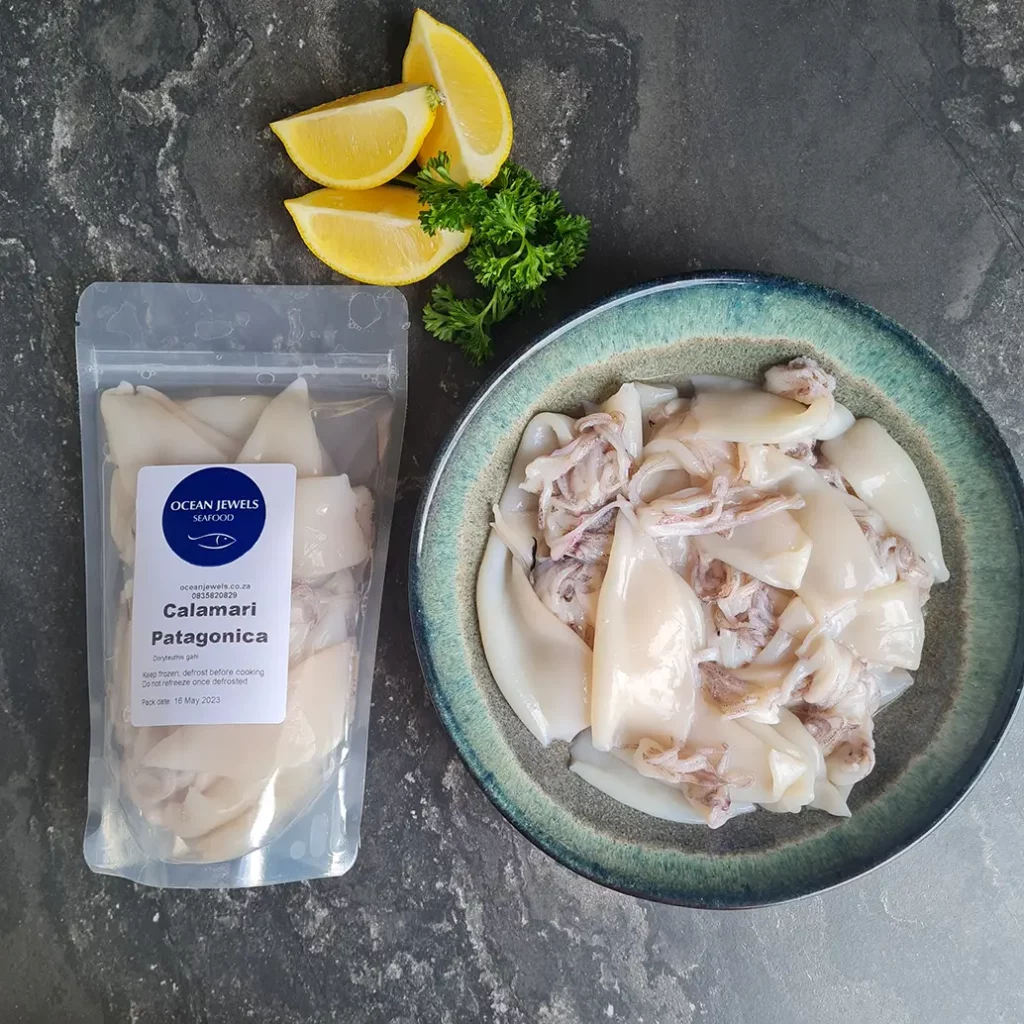
At Ocean Jewels, we stock cleaned calamari tubes and tentacles, ready for you to slice, season and cook. Allow approximately 150g to 200g of cleaned calamari per person, depending on whether you’re serving it as a starter, snack or main meal.
A little about our calamari
Much of the calamari we sell comes from the cold waters around Patagonia at the southern tip of South America. We also get locally caught South African calamari when it is available. Local supply can be inconsistent, so when we do manage to get our hands on some, we’ll always let our customers know.
Calamari is wonderfully versatile and having a pack in the freezer means you’re never far away from a quick seafood meal. You can fry it until crisp, sear it in a hot pan, add it to pasta or salads, or combine it with punchy Mediterranean flavours like chorizo, olives, tomatoes, garlic and chilli.
Here are three of our favourite ways to cook it.
Crispy Fried Calamari
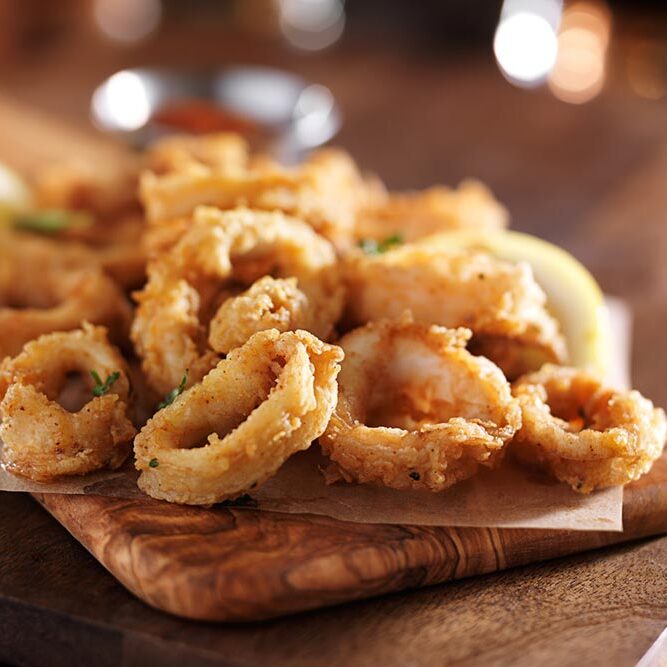
There is something particularly satisfying about getting restaurant-style crispy calamari right in your own kitchen. The secret is getting the calamari as dry as possible, using a light coating and making sure your oil is properly hot before you start cooking.
You’ll need
- Cleaned calamari tubes and tentacles
- Seasoned flour or Ocean Jewels Calamari Coating Mix
- Oil for frying
- Fresh lemon for serving
We now sell our Calamari Coating Mix, already blended and ready to use. It takes the guesswork out of getting that lovely seasoned coating and makes homemade fried calamari even easier.
If you prefer to make your own coating, use flour seasoned with cayenne pepper, paprika, fish masala, salt and pepper.
How to cook it
- Cut the calamari tubes into rings and leave the tentacles whole.
- Pat the calamari really well with a clean dish towel or kitchen paper. Removing excess moisture is important if you want a crisp coating.
- Toss the calamari in your coating mix until lightly covered. Place the coated calamari into a sieve and give it a good shake to remove any excess flour.
- Heat your oil to approximately 200°C.
- Fry the calamari in small batches for about 20 to 30 seconds, until the coating is crisp.
- Remove, drain on kitchen paper and serve immediately with plenty of fresh lemon.
The golden rule: don’t overcrowd the pot
This really does make a difference. Adding too much calamari at once drops the temperature of the oil, which means your calamari starts steaming instead of frying. The result will be a heavier, less crispy coating.
A deep-fat fryer makes controlling the temperature easier, but you can absolutely use a large, deep pot at home. If you don’t have a thermometer, an old-fashioned trick is to drop a small cube of bread into the oil. It should turn golden brown in around 30 seconds.
Easy Pan-Seared Calamari
If you don’t feel like dealing with a pot of hot oil, this is probably the easiest way to cook calamari at home. It’s quick, fresh and particularly good when finished with lemon, chilli and lots of parsley.
Cut your calamari tubes into pieces approximately 2cm wide and pat them completely dry. Heat a little oil in a frying pan until the pan is very hot. We like coconut oil, but sunflower or another neutral cooking oil works just as well.
Add the calamari in small batches and sear for approximately 20 to 30 seconds. Remove it from the pan straight away and season with salt, pepper, freshly squeezed lemon juice, chopped parsley and fresh chilli.
Again, resist the temptation to throw all the calamari into the pan at once. Calamari naturally releases moisture, and an overcrowded pan will quickly fill with liquid. Instead of getting that lovely seared finish, you’ll end up steaming it.
Calamari with Chorizo, Tomatoes and Olives
This is a great option when you want to turn calamari into more of a meal. The smoky chorizo, salty olives, sweet tomatoes and fresh lemon work beautifully with the calamari, and it’s a lovely dish to put in the middle of the table for everyone to share.

Start by slowly frying sliced chorizo until it begins to crisp and releases its lovely red oils. Remove the chorizo from the pan and set it aside. Add a little extra oil if necessary, then turn up the heat until the pan is very hot.
Sear your calamari in small batches for about 20 to 30 seconds at a time. Remove it from the pan and set aside while you prepare the rest of the dish.
Add the cooked chorizo back to the pan along with 1 cup of olives, 1 cup of cherry tomatoes, 1 crushed garlic clove, 1 sliced red pepper and a generous handful of chopped fresh parsley. Squeeze over the juice of one lemon and cook just until the tomatoes begin to soften.
Return the calamari to the pan right at the end, toss everything together and heat through briefly before serving.
This is delicious on its own, but even better with some crusty bread to mop up all those garlicky, smoky pan juices.
Calamari made easy
Calamari really doesn’t need to be something you only order at a restaurant. Keep a pack of cleaned tubes and tentacles in your freezer and you have the beginnings of a delicious meal that can be on the table in minutes.
And if crispy fried calamari is your favourite, grab a pack of our ready-to-use Calamari Coating Mix with your calamari. We’ve done the seasoning for you, so all you need to do is coat, fry, squeeze over some fresh lemon and enjoy.
Shop calamari and our Calamari Coating Mix from Ocean Jewels and make your next calamari night at home.
Hey Lynn, sure you can! Stews and curries being very wet means they freeze well so go ahead, make a…